
Effective material handling is critical for businesses with shipping or storage components. Facilities need to transport and store products quickly and efficiently, and pallets are central to these processes. Pallets are a staple of warehouses and shipping facilities, used to move around stacks of goods. These flat, horizontal support structures come in a range of shapes, sizes and materials to meet practically any application’s needs.
While pallets are a vital component of material handling, they present a significant cost. Regardless of their material, pallets break down over time due to wear and stress, especially when misused or overloaded. These pallets need repair and replacement, and the resulting expenses can cut into profits. Is there a way to extend pallet lifespans?
Jump to Sections:
- Types of Industrial Pallets
- Life Expectancy of Pallets
- How to Extend Your Existing Pallets’ Life
- What to Do With Pallets When You Can’t Use Them Anymore
- Shop at Cherry’s
In this article, we’ll discuss the different types of pallets and how to extend the life of each, so you can maximize your return on investment.

Types of Industrial Pallets
According to the U.S. Forest Service, approximately 2 billion pallets are in use in the U.S. today. The three primary types of materials used in industrial pallets are wood, plastic and metal, with wood being the most popular option. However, industrial pallets vary widely in construction, leading to a range of specific pallet types. The different types of pallets are as follows.
- Presswood pallets: While many pallets consist of hardwood or softwood, presswood pallets are becoming increasingly popular. Made from pressed-together wood fibers, presswood is economical, cheap and lightweight. These pallets can also nest together to save space when they are not in use and are easy to dispose of when they reach the end of their usable life.
- Plastic pallets: Plastic pallets are the leading alternative to wood pallets in the industry today. Easily cleaned and highly durable, plastic pallets offer an excellent return on investment. The food and beverage and chemical industries often rely on plastic pallets.
- AS/RS pallets: AS/RS pallets are specialized plastic pallets designed as captive skin or slave boards for use in automatic storage and retrieval systems.
- Chemical pallets: Chemical pallets are specially designed plastic pallets made with high-density polyethylene. These pallets are resistant to strong chemicals, withstanding corrosive conditions. These types of pallets are common in industrial chemical, petroleum and paint applications.
- Distribution pallets: Distribution pallets are another type of plastic pallets designed explicitly for warehouses and distribution centers that need sanitation and storage solutions. Distribution pallets are light, durable and nestable to help save floor space when not in use.
- Aluminum pallets: Aluminum pallets are another alternative to wood pallets, offering durability and resistance to corrosion while also being lightweight. These metal pallets are a staple in outdoor, food and beverage and airfreight applications.
- Wire mesh pallets: Wire mesh pallets are another form of durable metal pallets that work well in harsh climates. Due to their wire mesh design, these pallets allow for air movement while avoiding trapping debris between surfaces.
- Export pallets: Export pallets are specific pallets with phytosanitary certification that are used in international shipping. These pallets can consist of metal, plastic or wood, but must meet certification requirements to prevent contamination of internationally shipped goods.
Depending on your application, you’ll choose one or more of these pallet types to use in your facility.

Life Expectancy of Pallets
One essential question about pallets is how long they last. The answer to this question can be complex. Pallet lifespan depends on several factors, which primarily relate to their material.
- Material durability: Materials like plastic and metal have excellent durability and strength, resisting most wear and tear. On the other hand, wood is less durable, wearing down or cracking over time.
- Repair capability: Unlike metal or plastic, it’s relatively easy to replace or repair wood. While metal and plastic can undergo some repairs, these tend to be more costly to perform.
- Environmental conditions: Harsh conditions subject pallets to temperature changes, water and corrosive liquids and even insects, depending on the application. While metal and plastic are primarily resistant to most extremes, untreated wood is more susceptible to damage.
- Cleanliness: Initially, cleanliness may not seem like a significant factor, but it is an essential consideration in warehouses and distribution centers. Spills and insect activity can happen at any point in the transport and storage chain, and the ability to remove contaminants is essential for pallet longevity. Porous wood surfaces are harder to clean, making them more susceptible to rot and insect infestations.
- Usage: Finally, pallet usage is a significant factor in their lifespan. For example, loading pallets beyond their weight capacity can damage them, no matter their material composition.
In short, while wood pallets can undergo repairs as needed, they do not last as long as metal or plastic pallets. In Cherry’s Material Handling’s experience, a plastic pallet lifespan is about 10 times longer than that of a wood pallet, and metal pallets can last indefinitely when used and treated correctly.
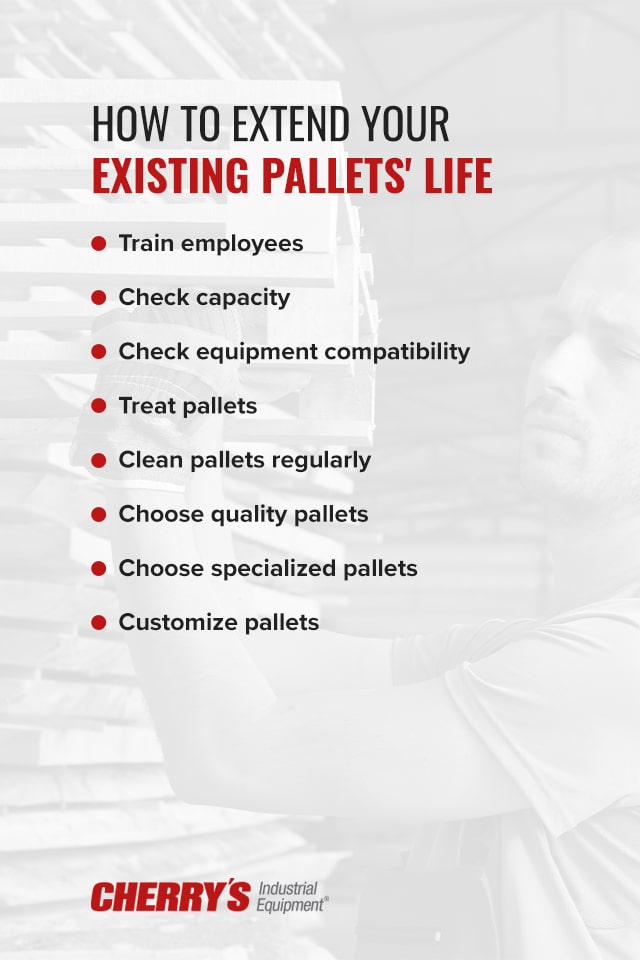
How to Extend Your Existing Pallets’ Life
While the factors above primarily affect pallet lifespans, facilities can take several steps to ensure their pallets last as long as possible. Below are a few tips on how to extend pallet lifespan.
- Train employees: Human error causes most pallet damage. Overloading and mishandling pallets are significant contributors to reduced pallet lifespans, but you can avoid this problem by providing pallet handling training for employees. Manufacturers should provide ongoing employee training on pallet safety, including inspecting, using and storing pallets correctly. This training should also include how to safely use machinery to pick up and handle pallets.
- Check capacity: Overloading pallets beyond their weight capacity is another primary cause of pallet damage. Overloaded wooden pallets can warp or crack, resulting in safety concerns in the warehouse. Even metal and plastic pallets, with their increased weight capacities, can sustain damage when overloaded. Always check the weight limit of each pallet type in use in the warehouse and ensure employees are aware of these capacities and correct loading procedures.
- Check equipment compatibility: Equipment incompatibility is another common cause of pallet damage. Pallets should be fully compatible with your existing equipment, including forklifts, pallet jacks and conveyors. Minor inconsistencies between equipment and pallet structures can result in excess stress on pallets, reducing their longevity. One way to avoid this problem is to use pallet prototypes before placing large orders of new pallets. Test this prototype at your facility to ensure compatibility before placing the full order.
- Treat pallets: If your warehouse uses wood pallets, it’s worth it to look into treatment options. Wood pallets rot in the presence of moisture and bugs, which significantly reduces their usable lifespan. Look into how to waterproof pallets and protect them from insect infestations.
- Clean pallets regularly: Cleaning and maintenance are other crucial ways to extend pallet lifespans. Sanitization can prevent damage and corrosion of all pallet materials, though methods will vary depending on the type of pallet. How to clean pallet wood will differ significantly from how to clean plastic pallets, which will diverge from how to take care of metal pallets. Additionally, different industries may have specific sanitation requirements for pallets. Always refer to manufacturer recommendations and industry standards when determining how to take care of pallets.
- Choose quality pallets: While lower-quality pallets may present a reduced upfront cost, they will cost more in the long run due to poor longevity. Poor-quality pallets are more susceptible to damage due to shoddy design, leaving your facility paying for replacements more frequently. Quality pallets will almost always last longer than poorly made ones, so they are a better long-term investment.
- Choose specialized pallets: Using pallets in conditions outside their intended use for can also harm pallet longevity. Oddly shaped or heavy items can place more strain on pallet surfaces, while corrosive materials can wear away at them. To ensure that pallets last as long as possible, choose pallets made to withstand your application’s unique conditions. For example, metal pallets are ideal for heavy items, while some plastic pallets can resist chemical corrosion.
- Customize pallets: Standard pallets may not always meet all your requirements — they may not work optimally with the products your warehouse handles or could be incompatible with your equipment. If you’re facing this problem, consider customized pallets. You can get these designed to meet your business’ unique product and facility needs, ensuring improved workflows while also increasing pallet longevity.
These tips can help extend your pallets’ life, but it is crucial to note that wood and plastic pallets will eventually reach their limits. Be sure to inspect pallets before using them, checking for cracks, loose parts or discoloration — if you’re not confident in the pallet’s integrity, remove it from service.
What to Do With Pallets When You Can’t Use Them Anymore
When a pallet gets damaged beyond repair or otherwise reaches the end of its usable life, it is critical to mark it and remove it from rotation. Damaged pallets are safety hazards in facilities, causing product loss and employee injury risks if they fail. However, once you take a pallet out of service, the question is what to do with it.
Once a pallet reaches the end of its usable life, there are a few options for pallet removal.
- Bulk buyers: Some places buy pallets in bulk to repurpose them. For example, wooden pallets can take on a second life as mulch, particleboard or outdoor products. Bulk buyers may also purchase metal or plastic pallets with minor defects, though this depends on the buyer.
- Pallet recycling: Wood, plastic and metal pallets are all recyclable, provided hazardous materials have not contaminated them. Reach out to local recycling companies to determine what they will accept. You can also research local waste management companies that specialize in pallet removal and recycling.
- Free pickup: If your facility has lightly used wood pallets and needs a quick and easy way to dispose of them, you can advertise them for free pickup. Many consumers use wooden pallets for gardening and carpentry projects, so they will gladly take them off your hands. You might also dispose of good-quality metal and plastic pallets this way, though there is less consumer interest in these types of pallets.
- Landfills: Landfills should be the last option for pallet disposal for any company. Landfills are not the optimal choice, as they adversely affect our environment. Additionally, specific locations will charge landfill fees for repeat users. However, for severely damaged pallets you can’t recycle, this is often the only available option.
Pallet removal options for your facility will largely depend on your local resources and regulations. Develop a pallet removal strategy by researching your local options and speaking with local waste removal professionals and other businesses that use pallets.

Shop at Cherry’s
Pallets are an essential part of material handling operations. With appropriate training and an extensive selection, your facility can benefit from long-lasting pallets that add value while minimizing costs. To do that, you need a supplier that can provide quality pallets and custom options. Cherry’s Material Handling is here to help.
With over two decades of experience as a material handling supplier, Cherry’s Material Handling has the products and know-how you need for your business. We provide a range of material handling equipment that can assist in essential tasks while improving safety and productivity. Our products include many pallet design choices, including wood, plastic and metal pallets of various designs and specifications to meet practically any application’s needs. We also produce custom plastic pallets made to your specific dimensions, capacity and composition, so you get what you need for your operation.
On top of our product range, Cherry’s Material Handling also offers a unique shopping experience. Our easy-to-navigate website features registered accounts and secured checkouts, and we back all our services with an attentive team of customer service and technical support professionals.
Discover the benefits of custom pallets from an experienced material handling supplier. Contact Cherry’s Material Handling today by calling 877-350-2729 or contact us via our online form to request additional information.